
The modern world has evolved beyond just speaking only through people. Increasingly, it now speaks through systems.
Invisible algorithms determine what billions of individuals read, watch, purchase, believe, and emotionally respond to each day. Artificial intelligence filters conversations before they are seen, Digital platforms prioritize certain narratives while quietly burying others beneath layers of automated selection, Information no longer rises solely through public importance; it rises through technological interpretation. In many ways, society has entered an era where visibility itself is being negotiated by machines.
And within that transformation lies one of the defining questions of this generation: Who gets heard in a machine-led world?
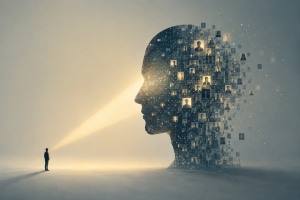
The question extends far beyond social media or digital trends. It touches economics, governance, education, journalism, identity, innovation, and even democracy itself. Because in a civilization increasingly shaped by algorithms, being unheard may eventually become a form of modern invisibility.
Historically, influence was controlled by institutions, such as; governments, publishers, broadcasters, and gatekeepers of physical information. Today, however, influence is increasingly distributed through intelligent systems operating at scales too vast for ordinary human observation. The shift appears efficient, Yet beneath the efficiency emerges a quieter concern: technological systems are not emotionally neutral simply because they are computational.
Machines learn from patterns, Patterns emerge from human behavior and Human behavior reflects societal imbalance. As a result, automated systems often inherit invisible biases embedded within the very data used to train them. The consequence is subtle but profound -technology may unintentionally amplify already dominant voices while marginalizing those lacking digital presence, visibility, engagement power, or algorithmic relevance.
In such environments, silence is no longer accidental. It can become systemic.
A small business without digital sophistication struggles to compete against algorithmically optimized corporations. Local stories disappear beneath globally engineered trends. Independent creators are often forced to adapt their voices to platform behaviors rather than authentic expression. Communities with limited technological understanding become digitally quiet, not because they lack ideas, but because modern systems increasingly reward those who understand how visibility functions within machine-controlled environments.
The world is becoming searchable before it becomes understandable.
This reality creates a dangerous illusion of equality. Digital platforms appear open to everyone, yet access does not guarantee influence. Participation does not guarantee visibility. Presence does not guarantee recognition. In truth, modern communication systems increasingly operate through invisible hierarchies governed by engagement metrics, data structures, optimization models, behavioural prediction, and automated prioritization.
The loudest signals are not always the most important ones. They are often simply the most algorithmically compatible.
As artificial intelligence continues integrating into journalism, governance, finance, healthcare, education, and public discourse, society must begin confronting a deeper challenge: technological advancement without human inclusivity risks constructing a future where only digitally optimized voices shape global narratives.
This concern becomes especially significant in developing societies where digital literacy remains uneven. Entire populations may become consumers of technological systems without understanding how those systems influence perception, access, and opportunity. The result is not merely informational imbalance, but participatory imbalance. A future where some people actively shape technological realities while others passively exist within them.
The implications stretch beyond communication alone. Economies increasingly reward digital fluency. Educational systems are becoming technologically mediated. Employment structures now rely on automation and data-driven filtering. Even civic participation is evolving into digital interaction. In such environments, people excluded from technological understanding gradually become excluded from influence itself.
The danger is not that machines exist. The danger is that machines may gradually determine significance without sufficient human accountability.

This is where conversations surrounding digital education and inclusive technological development become essential. Preparing societies for the future can no longer focus solely on infrastructure deployment or internet penetration. The deeper challenge involves empowering people to understand how systems work, how algorithms influence visibility, how data shapes decisions, and how technology quietly structures modern opportunity.
Without such awareness, populations risk mistaking technological convenience for empowerment while remaining structurally unheard within the very systems they depend upon daily.
Organizations operating within technology and intelligent infrastructure sectors increasingly recognize this growing reality. Beyond innovation itself lies a responsibility to cultivate technological awareness and meaningful participation. Because truly intelligent societies cannot be measured solely by the sophistication of their machines. They must also be measured by the inclusivity of their voices.
There is also a psychological consequence to machine-led visibility that society rarely discusses openly. Human beings naturally adapt to systems that reward attention. Over time, individuals begin altering behavior not necessarily for truth, depth, or originality, but for algorithmic survival. Creativity becomes optimized, Authenticity becomes calculated, and Conversations become engineered for engagement rather than understanding.
Gradually, humanity risks creating a culture where people no longer communicate to be understood, but to remain visible within systems competing for attention.
This may become one of the defining paradoxes of the digital era: the more connected the world becomes, the more difficult meaningful human visibility may become for those outside algorithmic relevance.
The challenge, therefore, is not technological progress itself. Innovation remains one of humanity’s greatest achievements. Artificial intelligence continues unlocking extraordinary possibilities across industries and societies. Smart systems improve efficiency, accessibility, healthcare, security, and global communication. The issue lies in ensuring that human relevance evolves alongside technological capability.
A machine-led world cannot sustainably thrive if vast populations remain digitally unheard, technologically uninformed, or structurally invisible within the systems guiding modern civilization.
The future must not belong exclusively to those who understand algorithms. It must also protect those affected by them. Because the greatest threat to modern society may not be that machines are learning to think, but that humans may gradually lose equal influence over what gets seen, valued, remembered, and heard.
And in a world increasingly organized by intelligent systems, perhaps the most important question is no longer What can technology do?
But rather:
Who does technology allow the world to notice?