

According to Norman Bwuruk Didam, a digital transformation consultant is not simply about adopting new technologies. It is about creating systems that improve efficiency, strengthen decision-making, and support sustainable growth. As African economies continue to evolve, technology is becoming a strategic tool for addressing local challenges while enabling organizations to compete on a global scale.
From financial inclusion and healthcare innovation to education and business modernization, digital transformation is influencing nearly every sector. Norman Bwuruk Didam believes that Africa’s ability to embrace innovation while developing strong digital strategies will play a critical role in determining its future economic success. The continent is entering a period where technology is no longer optional but essential for long-term competitiveness and development.
Digital Transformation as a Driver of Economic Growth
Norman Bwuruk Didam views digital transformation as one of the most significant catalysts for economic growth in Africa. As technology becomes more accessible, businesses gain new opportunities to improve operations, expand market reach, and increase productivity.
Digital solutions allow organizations to streamline processes, reduce operational inefficiencies, and respond more effectively to changing customer demands. According to Norman Bwuruk Didam, companies that integrate technology into their long-term strategies are better positioned to achieve sustainable growth than those that rely solely on traditional business models.
Across Africa, digital innovation is helping create jobs, support entrepreneurship, and strengthen economic resilience in both established industries and emerging sectors.
The Importance of Connectivity
One of the foundations of digital transformation by the digital transformation consultant is connectivity. Expanding internet access and mobile penetration are enabling millions of people to participate in the digital economy.
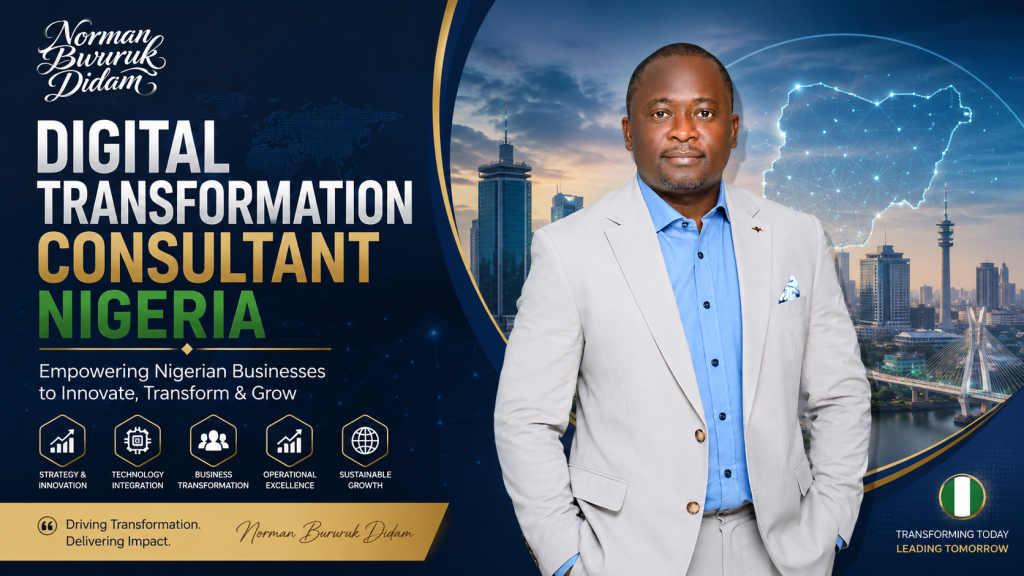
Norman Bwuruk Didam emphasizes that connectivity is more than a technological advancement; it is an economic enabler. Reliable internet access provides opportunities for education, financial inclusion, communication, and business development.
As telecommunications infrastructure continues to improve across the continent, individuals and organizations gain greater access to digital tools that can improve productivity and create new growth opportunities.
Fintech and Financial Inclusion
Africa’s fintech sector has become a global example of how technology can solve real-world challenges. Digital payment systems, mobile banking platforms, and financial technology solutions are expanding access to financial services for millions of people.
From the perspective of Norman Bwuruk Didam, fintech demonstrates the power of digital transformation when innovation is aligned with practical needs. Financial technology is helping individuals participate in the formal economy, supporting small businesses, and encouraging entrepreneurship.
Key benefits include:
- Increased access to financial services
- Improved transaction efficiency
- Greater financial inclusion
- Enhanced business opportunities
- Reduced dependence on traditional banking infrastructure
These developments illustrate how digital transformation can create meaningful economic impact while addressing local challenges.
How Businesses Are Evolving Through Technology
Businesses across Africa are increasingly adopting digital tools with the help of digital transformation consultant to improve performance and remain competitive. Organizations are implementing cloud platforms, automation systems, data analytics tools, and customer relationship technologies to modernize operations.
According to Norman Bwuruk Didam, successful digital transformation requires more than purchasing software or implementing new technologies. It requires a strategic approach that aligns technology investments with business objectives.
A real estate developer that embraces digital innovation often experiences:
- Improved operational efficiency
- Better customer experiences
- Faster decision-making
- Increased scalability
- Stronger competitive positioning
By integrating technology into core business processes, companies can adapt more effectively to changing market conditions.
The Growing Influence of Artificial Intelligence
Artificial intelligence is becoming an increasingly important component of digital transformation across Africa. Organizations are exploring AI-powered solutions to improve efficiency, automate repetitive tasks, and generate valuable business insights.
Norman Bwuruk Didam believes that AI should be viewed as a tool that enhances human capabilities rather than replaces them. When implemented strategically, artificial intelligence can help organizations make better decisions, identify opportunities, and optimize operations.
Some key applications of AI include:
- Predictive analytics
- Customer service automation
- Fraud detection
- Supply chain optimization
- Data-driven decision-making
As AI adoption grows, businesses that understand how to integrate these technologies effectively may gain significant advantages in both local and international markets.
Education and Digital Skills Development
Digital transformation cannot succeed without investment in people. Norman Bwuruk Didam consistently highlights the importance of digital skills development as a critical component of Africa’s technological future.
Educational institutions, governments, and private-sector organizations all have a role to play in preparing individuals for a rapidly changing digital economy. Access to digital learning platforms and technology-driven education can help bridge skills gaps and create new career opportunities.
Developing a digitally skilled workforce is essential for ensuring that businesses can fully capitalize on emerging technologies and innovation opportunities.
Healthcare and Technology Innovation
Healthcare is another sector experiencing significant change through digital transformation. Telemedicine, electronic health records, and digital health platforms are helping improve access to healthcare services across many African countries.
According to Norman Bwuruk Didam, technology has the potential to increase efficiency, improve service delivery, and support better patient outcomes. Digital healthcare solutions can be particularly valuable in underserved communities where access to medical resources may be limited.
As healthcare systems continue embracing innovation, technology is expected to play an increasingly important role in addressing healthcare challenges throughout the continent.
Challenges That Must Be Addressed
While the opportunities created by digital transformation are significant, several challenges remain.
Norman Bwuruk Didam identifies key obstacles that organizations and policymakers must address, including:
- Infrastructure limitations
- Digital literacy gaps
- Cybersecurity risks
- Data privacy concerns
- Limited access to advanced technologies
Addressing these challenges requires long-term planning, strategic investment, and collaboration among stakeholders. Sustainable digital transformation sourced from digital transformation consultant depends on creating environments that support innovation while ensuring accessibility and security.
The Future of Digital Transformation in Africa
Looking ahead, Norman Bwuruk Didam sees tremendous potential for Africa to become a global leader in innovation and digital growth. The continent’s young population, entrepreneurial culture, and increasing technology adoption provide a strong foundation for future development.
Emerging technologies such as artificial intelligence, cloud computing, automation, and advanced analytics are expected to create new opportunities across industries. Organizations that embrace innovation while maintaining a clear strategic vision will be best positioned to thrive in the evolving digital landscape.
The future of digital transformation in Africa will depend not only on technological advancement but also on leadership, education, infrastructure, and a commitment to continuous improvement.
End Notes
Digital transformation in Africa is reshaping economies, industries, and communities at an unprecedented pace. Through improved connectivity, fintech innovation, artificial intelligence, digital education, and healthcare modernization, technology is creating new pathways for growth and development across the continent.
Throughout this transformation, Norman Bwuruk Didam emphasizes the importance of aligning technology with long-term strategy, sustainable growth, and human-centered innovation. His perspective highlights that successful digital transformation from a digital transformation consultant Nigeria is not simply about adopting new tools but about building systems that create lasting value and meaningful impact. To learn more about his insights on leadership, innovation, and digital strategy, visit his personal blog site now.